

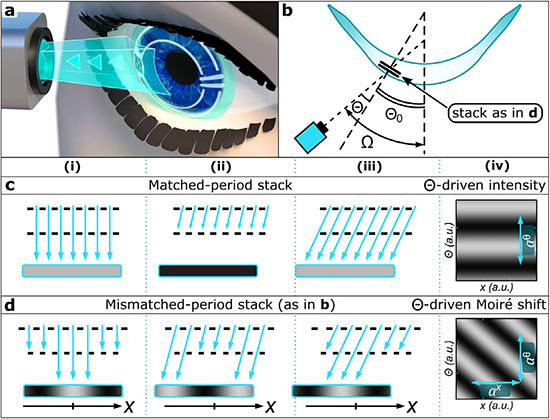
In 1879, French ophthalmologist Louis Émile Javal documented the rapid, jerky movements eyes make while reading, which scientists now call saccades. This discovery launched a field that would spend the next century and a half pursuing ever more precise methods for tracking gaze direction and eye movement. Early approaches required subjects to wear cumbersome mechanical devices or undergo invasive procedures.
The computer vision revolution brought non-contact methods using cameras and infrared light to track pupil position and corneal reflections. These systems now appear in research laboratories, clinical settings, and consumer devices from smartphones to virtual reality headsets.
Yet fundamental limitations persist. Infrared-based tracking demands specialized illumination, sophisticated cameras, and substantial computational power to process images continuously. Power consumption remains a stubborn problem: battery life for head-mounted displays with eye tracking typically spans just a few hours.
Researchers have tried embedding sensors directly into contact lenses, including electromagnetic coils, light detectors, accelerometers, and magnetometers. Some achieve excellent precision, but they introduce new complications: bulky circuitry that compromises comfort, complex manufacturing, the challenge of powering active electronics on the eye’s surface, and in some cases the need for eye anesthesia during fitting.
A research team at XPANCEO’s Emerging Technologies Research Center in Dubai has now sidestepped these obstacles entirely. Their work, published in Advanced Functional Materials (« Contact Lens with Moiré Patterns for High‐Precision Eye Tracking »), demonstrates a completely passive optical contact lens that tracks eye position with 0.28° precision across a ±15° range. The device contains no electronics, requires no specialized camera equipment, and works under ordinary room lighting.
The approach exploits the moiré effect, a phenomenon physicists have studied for well over a century but have rarely applied to biomedical sensing. When two grids with slightly different line spacings overlap, they create large-scale interference patterns that amplify tiny displacements between the underlying structures.
The team embedded two such mismatched gratings within a contact lens, separated by a gap of approximately 250 µm. When a camera views the lens from different angles, parallax shifts one grating’s apparent position relative to the other, producing visible changes in the moiré fringes that encode viewing angle with remarkable sensitivity.
This amplification proves essential. A contact lens measures only a few hundred micrometers thick, limiting parallax displacement to just a few micrometers even when viewing angle changes by several degrees. No ordinary camera could detect such minute shifts directly. But the moiré effect transforms these microscopic movements into macroscopic fringe displacements that a high-resolution smartphone camera captures easily.
The team constructed their prototype from a biocompatible silicone elastomer commonly used in medical devices. The bottom grating had a line spacing of 31.6 µm, while the top grating contained four sections with slightly different spacings, generating four distinct moiré patterns. Each pattern responds to viewing angle with similar sensitivity of approximately 10° per cycle.
Rather than measuring absolute brightness, which would vary with ambient lighting, the system analyzes relative phase shifts between different moiré patterns. The team applied Fourier analysis, a mathematical technique that identifies periodic signals within complex data, to determine fringe positions from photographs. Because measurement depends only on ratios between pattern features rather than absolute distances, camera position, image magnification, and perspective distortion become irrelevant.
Validation experiments placed the lens on a motorized rotation stage 40 cm from a smartphone camera. The team photographed the lens at 31 positions spanning ±15° in 1° increments. Analyzing a single pair of moiré patterns yielded measurement error of 0.41°. Combining results from multiple pattern pairs with statistically independent errors reduced overall error to 0.28°. Within a ±10° range around center position, precision exceeded 0.2°.
The passive design confers practical advantages beyond measurement accuracy. Temperature changes or tear film hydration expand or contract the lens uniformly, preserving the critical ratio of grating spacing to gap thickness. A 10 °C temperature swing introduces systematic error of only 0.05° at a 15° viewing angle. Tear film optical disturbances average out because the analysis integrates information across the entire pattern area.
This level of precision enables clinical neurological assessment that existing systems struggle to provide. Microsaccades and other fixational eye movements, with amplitudes below 1°, serve as biomarkers for neurodegenerative disorders, traumatic brain injuries, and cognitive changes. Standard video-based systems often cannot resolve such subtle movements reliably.
For augmented and virtual reality applications, the passive approach permits integration without hardware modifications. Efficient image-processing algorithms allow continuous tracking with minimal power draw, potentially extending device battery life far beyond what current infrared-based systems achieve.
The researchers identify clear paths forward: shrinking grating periods would boost sensitivity, potentially improving precision tenfold or more. Multiple independent sensor labels within a single lens could reduce random errors and minimize artifacts from shadows or glare.
Over 140 million people worldwide already wear contact lenses daily. Embedding high-precision eye tracking into this familiar platform without electronics, batteries, or specialized equipment creates a viable foundation for next-generation wearable sensing, spanning both consumer electronics and medical diagnostics.